Why Korean Buyers Choose Pakistani Sesame
South Korea imports the great majority of the sesame it consumes. Domestic seed is scarce and expensive, out-of-quota tariffs are very high (around 630%), and import volumes are concentrated in tariff-rate-quota purchases — much of it via aT tenders — alongside processing-trade demand. That makes origin quality and documentation reliability decisive. Here is why importers in Busan, Seoul, and Incheon buy from Kohenoor International:
- High Oil Content: 48-52% — Korean chamgireum pressers value Pakistani sesame for oil yield among the highest of any commercial origin, with free fatty acid held at ≤2% to protect the fragrant-oil flavour profile that Korean consumers expect.
- 99.98% Purity, Sortex-Cleaned — Multi-stage processing (pre-cleaning, de-stoning, gravity separation, colour sorting, metal detection) holds admixture at ≤0.02%. For roasted-seed products, that means fewer burnt specks, uniform colour development, and cleaner intake lines.
- MFDS-Ready Documentation — Every lot ships with a Certificate of Analysis covering aflatoxin and a pesticide-residue screen aligned with Korea's Positive List System (PLS), plus the Phytosanitary Certificate — prepared so the MFDS food import inspection clears without queries.
- aT Tender & TRQ Supply Experience — We quote firm, validity-stated FOB/CFR prices with tender-spec CoAs and committed shipment windows, supporting both tender participants and private processors importing under quota allocations.
- Short, Reliable Transit: 14-18 Days — Karachi to Busan is weeks faster than African or Latin American origins, reducing inventory risk and keeping fresh-crop quality intact on arrival.
- Direct Farm-to-Port Sourcing — We buy directly from growers across Sindh and Punjab and process in Hyderabad, giving traceable lots, consistent grading, and competitive FOB pricing without intermediary margins.
South Korea's Sesame Market: Oil Pressing & Food Demand
Sesame sits at the heart of Korean food culture. Roasted sesame oil (chamgireum) is pressed by everyone from artisan mills at traditional markets to industrial crushers supplying retail brands, and oil yield per tonne of seed decides their margins. Toasted and ground sesame (kkae-sogeum) seasons soups, namul, and barbecue dipping salts, demanding uniform kernel size and colour. And black sesame (heugimja) has become one of Korea's strongest health food trends — black sesame lattes, porridges, powders, and desserts — pulling premium volumes of deep-coloured, clean-tasting black seed.
Bakery, confectionery, and food service add steady baseline demand. Because Korean processors work to tight specifications and MFDS inspection is documentation-driven, buyers consolidate around exporters who deliver the same specification lot after lot with complete paperwork. Kohenoor International supplies exactly that: sortex-cleaned, lab-tested sesame with a Korea-ready document set on every container.
Applications for Pakistani Sesame in South Korea
Chamgireum Oil Pressing
Roasted Sesame Oil Mills
48-52% oil content; FFA ≤2%
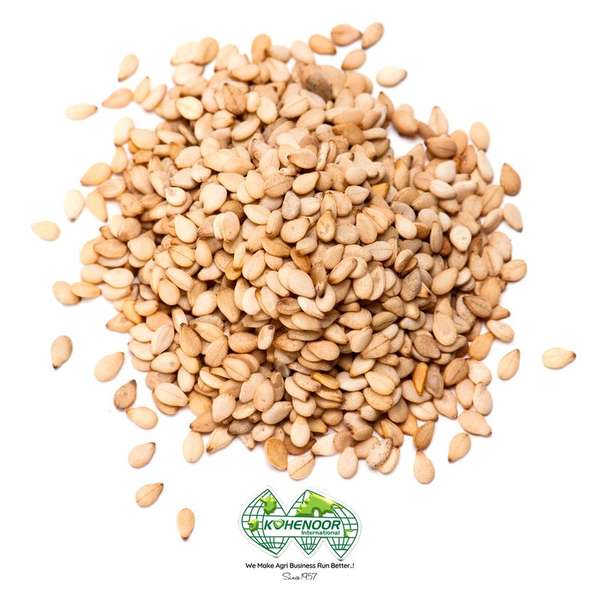
Natural white sesame optimised for roasting and pressing. High oil content and low FFA translate directly into better yields and the deep, nutty fragrance Korean consumers judge oil by.
Recommended: Natural white sesame, 20ft FCL (18-19 MT)
Gomasio & Seasonings
Kkae-sogeum & Table Condiments
99.98% purity; uniform kernel size
Sortex-graded seed roasts evenly and grinds to a consistent texture — essential for seasoning brands, HMR manufacturers, and food service suppliers.
Recommended: Natural white or hulled sesame
Black Sesame Health Foods
Heugimja Lattes, Powders & Desserts
Deep uniform colour; clean taste
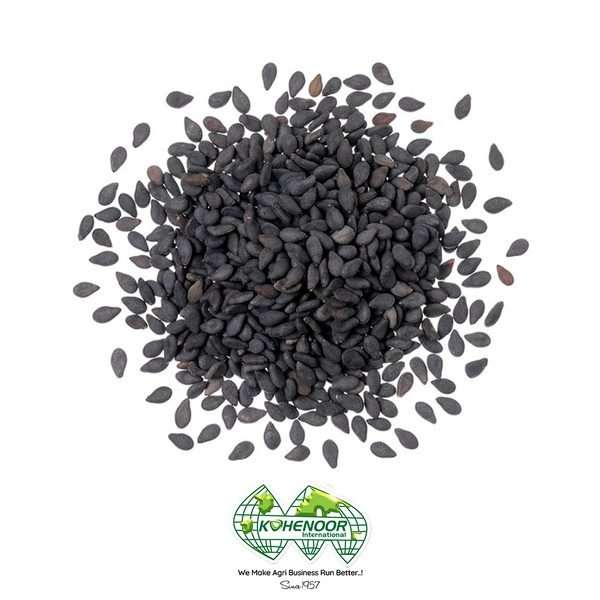
Korea's black sesame boom — lattes, juk (porridge), powders, and premium desserts — needs consistently dark, well-graded seed. Our black sesame is colour-sorted for exactly this segment.
Recommended: Black sesame, 25 KG PP bags
Bakery & Confectionery
Toppings, Gangjeong & Snacks
Uniform colour after sortex grading
Even size and colour for bread and burger-bun toppings, traditional gangjeong sesame brittle, and modern snack bars where visual consistency matters on shelf.
Recommended: Hulled or natural white sesame
Food Service & HMR
Restaurant Chains & Meal Kits
Admixture ≤0.02%; metal-detected
Clean, metal-detected lots protect production lines for home-meal-replacement manufacturers and franchise commissaries scaling up sesame-based sauces and garnishes.
Recommended: Natural white sesame
Trading & TRQ Tender Supply
aT Tenders & Quota Imports
Firm quotes; committed shipment windows
For trading houses bidding aT tenders or importing under TRQ allocations, we hold quoted specifications and shipment schedules firm, with tender-grade documentation on every lot.
Recommended: Natural white sesame, multi-container
Sesame Seed Specifications
| Parameter | Specification |
|---|
| Botanical Name | Sesamum indicum L. |
| Varieties | Natural (White), Hulled, Black |
| Purity | 99.98% minimum, sortex-cleaned |
| Oil Content | 48-52% |
| Moisture | ≤5% |
| FFA (Free Fatty Acid) | ≤2% |
| Admixture | ≤0.02% |
| Aflatoxin | Below detectable limits (lab-tested per lot) |
| Pesticide Residues | Screened against Korea's Positive List System (PLS) |
| Origin | Sindh & Punjab, Pakistan |
| HS Code | 1207.40 |
| Packaging | 25/50 KG PP bags or custom packaging |
| MOQ | 5 Metric Tons |
| Incoterms | FOB Karachi / CIF / CFR Korean ports |
| Documents | Phytosanitary Certificate + Certificate of Analysis with every shipment |
Shipping & Logistics: Karachi to South Korea
We load containers at Karachi Port (KICT / SAPT terminals), roughly 165 km from our Hyderabad facility, giving fast stuffing turnaround after order confirmation. Direct and single-transshipment services connect Karachi with Korea's main gateways:
| Destination Port | Typical Transit Time | Serves |
|---|
| Busan | 14-18 days | Korea's main gateway; Gyeongsang processing belt |
| Incheon | 15-19 days | Seoul metropolitan area & northern Gyeonggi |
| Gwangyang | 14-18 days | Jeolla region food industry |
Documentation for Korean Customs & MFDS Clearance
Korean food import clearance is inspection- and documentation-driven. Every Kohenoor shipment to South Korea includes:
- Phytosanitary Certificate issued by Pakistan's Department of Plant Protection, meeting Korean plant-quarantine requirements
- Certificate of Analysis (CoA) covering purity, moisture, oil content, FFA, admixture, aflatoxin, and a pesticide-residue screen aligned with the Positive List System (PLS)
- Certificate of Origin, Bill of Lading, commercial invoice, and packing list matching your import declaration
- MFDS support: we align consignment labelling and documents with Ministry of Food and Drug Safety import-inspection requirements and coordinate with your customs broker to resolve any queries before vessel arrival
We ship via HMM, Maersk, MSC, COSCO, and other main-line carriers, and can arrange fumigation certificates and third-party inspections (SGS or equivalent) on request. Terms available: FOB Karachi, CFR, or CIF to your nominated Korean port.
How Korean Importers Order From Us
- Step 1 — Enquiry & Quote: Send your target specification, volume, and destination port via our order page or WhatsApp. We respond with a firm FOB Karachi / CFR / CIF quotation within 24 hours, valid for a stated period against current crop pricing.
- Step 2 — Sample Approval: We courier a 500 g to 2 kg representative sample to your facility or lab in Korea within 5-7 days. You confirm purity, oil content, colour, and residue results against the CoA before committing.
- Step 3 — Contract & Payment: We issue a proforma invoice covering quantity, specification, packing, incoterms, and payment terms (T/T or LC at sight). Production and container booking begin on confirmation.
- Step 4 — Shipment & Documents: Container stuffed, sealed, and loaded at Karachi; the full Korea-ready document set (Phytosanitary, CoA with PLS residue screen, Certificate of Origin, B/L, invoice, packing list) is couriered or released per agreed terms before arrival.
Why Kohenoor International
Choosing a sesame supplier is ultimately about risk: will the quality match the sample, will the documents clear MFDS inspection, will the container ship inside the agreed window? Kohenoor International has been answering those questions for buyers since 1957.
- Exporting Since 1957 — Nearly seven decades of continuous agricultural export experience from Hyderabad, Sindh, across three generations of the business.
- 70+ Countries Served — Our seeds, herbs, and spices ship to buyers in more than 70 countries, including sustained sesame volumes to East Asia.
- ISO 9001:2015 + HACCP Certified — Documented quality management and food-safety controls across sourcing, processing, and packing.
- 60+ Product Portfolio — Sesame, fennel, fenugreek, basil, alfalfa, and dozens more — consolidate multiple ingredients into one container from one audited supplier.
- Industry Memberships — Hyderabad Chamber of Commerce, Rice Exporters Association of Pakistan (REAP), and the International Seed Federation (ISF).
- Full Traceability & Testing — Every lot is lab-tested and shipped with a Certificate of Analysis; samples are couriered before you commit.
Frequently Asked Questions — Sesame Seeds to South Korea
What is the minimum order quantity for sesame seeds to South Korea?
Our standard MOQ for Korean buyers is 5 metric tons (MT). Most Korean oil pressers and food processors order full container loads of 18-19 MT (20ft FCL), and volume pricing applies for multi-container and contract orders. Pre-shipment samples of 500 g to 2 kg are couriered to Korea within 5-7 days so your lab can verify the specification first.
How long does shipping take from Karachi to Busan or Incheon?
Sailings from Karachi Port (KICT/SAPT) reach Busan in approximately 14-18 days and Incheon in 15-19 days depending on the carrier and routing. We ship via main-line carriers including HMM, Maersk, MSC, and COSCO, and share the booking confirmation and vessel schedule at order confirmation.
What documents do you provide for Korean customs and MFDS import inspection?
Every shipment to South Korea includes a Phytosanitary Certificate issued by Pakistan's Department of Plant Protection, a Certificate of Analysis covering purity, moisture, oil content, FFA, aflatoxin, and a pesticide-residue screen aligned with Korea's Positive List System (PLS), plus a Certificate of Origin, Bill of Lading, commercial invoice, and packing list. We coordinate with your customs broker so the MFDS food import inspection proceeds without document queries.
Can you supply sesame for aT tenders and TRQ imports?
Yes. A large share of Korea's sesame imports moves under the tariff-rate quota, much of it purchased through tenders run by aT (Korea Agro-Fisheries & Food Trade Corporation). We provide firm FOB Karachi / CFR Busan quotations with stated validity, tender-spec Certificates of Analysis, and guaranteed shipment windows for tender participants and TRQ allocation holders.
What payment terms do you accept for Korean buyers?
We accept T/T (telegraphic transfer, typically 30% advance with balance against scanned shipping documents) and irrevocable LC at sight from recognized banks. For established repeat buyers we can discuss CAD terms. All prices are quoted FOB Karachi, CFR, or CIF Korean ports in USD.