Why Turkish Tahini & Halva Producers Choose Pakistani Sesame
From the tahini mills of Gaziantep and Kahramanmaraş to the halva houses of Istanbul and the simit bakeries on every Turkish street corner, sesame is a strategic raw material for Turkey's food industry. Domestic production meets only a fraction of national demand, so quality of the imported seed decides the quality of the finished tahini. Here is what Kohenoor International delivers to Turkish importers:
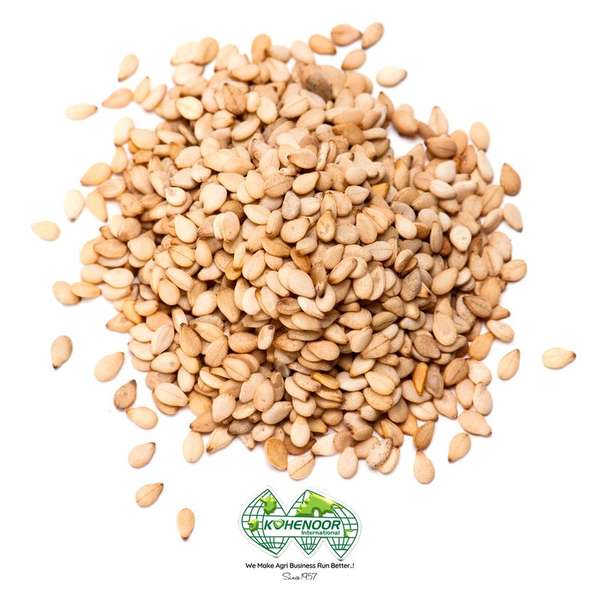
- Tahini-Grade Natural White Sesame — Light, uniform cream-white colour and a naturally sweet, non-bitter flavour profile after roasting. The seed hulls cleanly and grinds into pale, smooth tahini with excellent oil release — the characteristics premium tahini and halva brands are judged on.
- 99.98% Purity, Sortex-Cleaned — Multi-stage processing (pre-cleaning, de-stoning, gravity separation, colour sorting, metal detection) holds admixture at ≤0.02%. Fewer dark or immature seeds means fewer specks in the paste and less waste at your hulling line.
- 48-52% Oil Content — High oil content produces tahini with the right viscosity and mouthfeel without additives, and improves yield per tonne of raw seed for grinders.
- Low FFA (≤2%) and Aflatoxin Below Detectable Limits — Every lot is laboratory tested. Low free fatty acid protects tahini shelf life and prevents rancid notes; a full Certificate of Analysis accompanies each shipment.
- Competitive Alternative to African Origins — Pakistani sesame competes head-to-head with Sudanese and Nigerian seed on quality while offering a stable, well-documented supply chain, direct communication with the processor-exporter, and reliable sailing schedules out of Karachi.
- Seasonal Contract Programs — Halva and tahini demand peaks around Ramadan and winter. We reserve crop volumes against seasonal contracts so Turkish buyers have secured tonnage and pricing before the peak season begins.
Turkey's Tahini & Halva Industry: A Market Built on Imported Sesame
Turkey processes hundreds of thousands of tonnes of sesame annually, while domestic harvests typically supply well under twenty percent of that requirement. The result: Turkey is consistently among the world's top sesame importing nations. Tahini is the backbone product — consumed directly, blended with grape molasses (tahin-pekmez) as a traditional breakfast, and used as the base for halva, one of Turkey's signature confections and a significant export in its own right. Turkish halva and tahini brands ship to Europe, the Middle East, and North America, which means the raw sesame entering Mersin and Istanbul must satisfy not only Turkish standards but also the food-safety expectations of Turkey's own export customers.
That is why serious Turkish grinders qualify suppliers carefully: they need consistent colour, verified purity, dependable aflatoxin results, and documentation that clears the Turkish Ministry of Agriculture and Forestry's import controls without surprises. Kohenoor International builds its Turkey program around precisely those requirements — lot-level lab testing, sortex-graded uniformity, and a complete export document set prepared before the vessel sails.
Applications for Pakistani Sesame in Turkey
Tahini (Tahin) Production
Stone-Milled & Industrial Grinding
99.98% purity; pale, uniform kernels
Our natural white sesame hulls evenly and grinds into light-coloured, smooth tahini with clean flavour and natural sweetness — suited to both traditional stone mills and modern industrial grinders.
Recommended: Natural white sesame, 20ft FCL (18-19 MT)
Halva (Helva) Manufacturing
Plain, Pistachio & Cocoa Halva
48-52% oil; low FFA for shelf life
Consistent tahini from consistent seed is the foundation of fine-textured halva. Low FFA protects against rancidity through halva's long retail shelf life, including export shipments.
Recommended: Natural white or hulled sesame
Simit & Bakery
Toppings & Coatings
Uniform size & golden roast colour
Simit — Turkey's sesame-crusted bread ring — demands seed that roasts to an even golden colour and adheres well. Sortex grading gives bakeries batch-to-batch visual consistency.
Recommended: Natural white sesame, 25 KG bags
Confectionery & Sesame Bars
Krokan, Sesame Snaps & Sweets
Admixture ≤0.02%; metal-detected lots
Clean, low-admixture seed protects candy lines and delivers repeatable caramelisation and flavour development in sesame brittle and snack bars.
Recommended: Hulled or natural white sesame
Sesame Oil & Food Processing
Cold-Press & Refined Oil
High extraction yield per tonne
Turkish oil pressers benefit from the 48-52% oil content of Pakistani seed, improving crush economics for both gourmet cold-pressed and refined sesame oil.
Recommended: Natural white sesame, bulk or 50 KG bags
Re-Export & Distribution
Traders Serving EU & MENA
Custom packing & buyer marks available
Istanbul and Mersin trading houses redistribute sesame regionally. We support private marks, custom bag weights, and mixed-product containers with our other seeds and spices.
Recommended: 25/50 KG PP bags with buyer branding
Sesame Seed Specifications
| Parameter | Specification |
|---|
| Botanical Name | Sesamum indicum L. |
| Varieties | Natural (White), Hulled, Black |
| Purity | 99.98% minimum, sortex-cleaned |
| Oil Content | 48-52% |
| Moisture | ≤5% |
| FFA (Free Fatty Acid) | ≤2% |
| Admixture | ≤0.02% |
| Aflatoxin | Below detectable limits (lab-tested per lot) |
| Origin | Sindh & Punjab, Pakistan |
| HS Code | 1207.40 |
| Packaging | 25/50 KG PP bags or custom packaging |
| MOQ | 5 Metric Tons |
| Incoterms | FOB Karachi / CIF / CFR Mersin, Istanbul |
| Documents | Phytosanitary Certificate + Certificate of Analysis with every shipment |
Shipping & Logistics: Karachi to Turkey
Containers are stuffed at our Hyderabad facility and loaded at Karachi Port. Regular services connect Karachi with Turkey's two main import gateways for foodstuffs:
| Destination Port | Typical Transit Time | Serves |
|---|
| Mersin | 12-16 days | Gaziantep & southeastern tahini/halva cluster |
| Istanbul (Ambarli) | 14-18 days | Marmara region food industry & national distribution |
| Izmir (Aliaga) | 15-18 days | Aegean processors & exporters |
Export Documentation for Turkey
Every consignment ships with a complete document set prepared for Turkish import control:
- Phytosanitary Certificate issued by Pakistan's Department of Plant Protection
- Certificate of Analysis (CoA) covering purity, moisture, oil content, FFA, admixture, and aflatoxin
- Certificate of Origin attested by the Hyderabad Chamber of Commerce
- Bill of Lading, commercial invoice, and packing list
- Additional inspection certificates (SGS or equivalent) and fumigation certificates available on request
Terms available: FOB Karachi, CFR, or CIF Mersin/Istanbul. Routing is typically via Jebel Ali or Port Said transshipment with main-line carriers; we share the vessel schedule at booking and track every container to arrival.
How Turkish Buyers Order From Us
- Step 1 — Enquiry & Quote: Share your specification (natural white for tahini, hulled, or black), volume, and destination port via our order page or WhatsApp. We reply with a firm FOB Karachi / CFR / CIF quotation within 24 hours.
- Step 2 — Grinding Trial: We courier a sample to your mill in Turkey. Run your own hulling, roasting, and grinding trials; compare colour, taste, and oil release against your current origin before committing.
- Step 3 — Contract & Payment: Proforma invoice covering quantity, specification, packing, incoterms, and payment terms (T/T or LC at sight); seasonal contracts can lock volume ahead of the Ramadan and winter halva peaks.
- Step 4 — Shipment & Documents: Container stuffed and sealed at our Hyderabad facility, loaded at Karachi, with the full document set (Phytosanitary, CoA, Certificate of Origin, B/L, invoice, packing list) released per agreed terms before arrival at Mersin or Istanbul.
Why Kohenoor International
Turkish grinders qualify sesame suppliers on three things: consistency of the seed, credibility of the paperwork, and reliability of the shipment. Kohenoor International has been building that reputation since 1957.
- Exporting Since 1957 — Nearly seven decades of agricultural export experience from Hyderabad, Sindh, with sesame as one of our flagship products.
- 70+ Countries Served — Buyers in more than 70 countries, including tahini and halva producers across the Middle East and Mediterranean.
- ISO 9001:2015 + HACCP Certified — Audited quality management and food-safety systems from sourcing through packing.
- 60+ Product Portfolio — Combine sesame with fennel, fenugreek, cumin and more in a single consolidated container from one audited supplier.
- Industry Memberships — Hyderabad Chamber of Commerce, Rice Exporters Association of Pakistan (REAP), and the International Seed Federation (ISF).
- Samples Before You Commit — Run your own hulling, roasting, and grinding trials on couriered samples drawn from the actual commercial lots.
If your mill is comparing origins for the coming season, ask us for a side-by-side offer: same specification, delivered CFR Mersin or Istanbul, with a sample lot for grinding trials. Most Turkish buyers who test Pakistani seed against their incumbent origin keep it in the blend — and many move to it fully.
Frequently Asked Questions — Sesame Seeds to Turkey
What is the minimum order quantity for sesame seeds to Turkey?
Our MOQ for Turkish buyers is 5 metric tons (MT). Tahini and halva producers typically order full 20ft containers of 18-19 MT for the best per-tonne freight economics, and we offer volume pricing for multi-container and seasonal contract programs covering the Ramadan and winter halva peaks.
How long does shipping take from Karachi to Mersin or Istanbul?
Sailings from Karachi Port to Mersin typically take 12-16 days, and to Istanbul (Ambarli) around 14-18 days, depending on carrier and transshipment routing (commonly via Jebel Ali or Port Said). We share the vessel schedule at booking and track the container through to arrival.
What documents accompany each sesame shipment to Turkey?
Every consignment ships with a Phytosanitary Certificate from Pakistan's Department of Plant Protection, a Certificate of Analysis covering purity, moisture, oil content, FFA and aflatoxin, a Certificate of Origin, commercial invoice, packing list, and Bill of Lading. Documentation is prepared to meet the requirements of the Turkish Ministry of Agriculture and Forestry for oilseed imports.
Can I test your sesame seeds for tahini production before ordering?
Yes. We courier 500 g to 2 kg samples to Turkey within 5-7 days so your production team can run hulling, roasting and grinding trials and verify colour, taste and oil release before committing. The sample is drawn from the same crop lots we ship commercially.
What payment terms do you offer Turkish importers?
We work with T/T (typically 30% advance, balance against copy of shipping documents) and irrevocable LC at sight through recognized banks. Prices are quoted in USD on FOB Karachi, CFR or CIF Mersin/Istanbul terms. For repeat buyers we can structure seasonal contracts with fixed or indexed pricing.