What Are Ajwain Seeds?
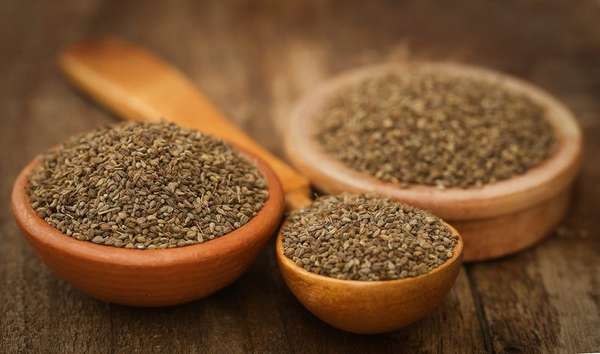
Ajwain seeds are the small, ridged fruits of the Trachyspermum ammi plant, an annual herb belonging to the Apiaceae (carrot/parsley) family. Despite being universally called seeds in the spice trade, they are technically the dried schizocarps — the split fruits — of the plant. Ajwain goes by many names across regions: carom seeds in international commerce, bishops weed in botanical references, ajwain or ajwan across South Asia, and netch azmud in Ethiopian cuisine.
Each ajwain seed is tiny — roughly 2mm in length — with an olive-green to brown colour and distinctive longitudinal ridges running along its surface. But what the seed lacks in size it more than compensates for in potency. Bite into a single ajwain seed and you are immediately met with a sharp, pungent, thyme-like flavour that is unmistakable. This intense aromatic character comes from thymol, the dominant essential oil compound that sets ajwain apart from nearly every other spice in the Apiaceae family.
The plant itself is native to the eastern Mediterranean and western Asia, but today it is cultivated primarily in Pakistan, India, Iran, Egypt, and Afghanistan. In Pakistan, ajwain cultivation is concentrated in the Sindh and Balochistan provinces, where the semi-arid climate and well-drained soils create ideal growing conditions. The crop matures in approximately 150-170 days, and harvesting takes place when the seed heads turn brown and the characteristic aroma intensifies — typically between March and May.
Thymol: The Active Compound Behind Ajwain's Power
The most scientifically significant aspect of ajwain seeds is their extraordinarily high thymol content. Thymol (2-isopropyl-5-methylphenol) is a monoterpene phenol that constitutes 35-60% of ajwain's essential oil, which itself represents 2-5% of the seed's total weight. This makes ajwain one of the richest natural sources of thymol available in the botanical world — far exceeding thyme itself in concentration per unit weight.
Thymol is the compound responsible for ajwain's sharp, penetrating aroma and its remarkable biological activity. It is a proven antimicrobial agent, effective against a broad spectrum of bacteria including E. coli, Staphylococcus aureus, and Salmonella typhimurium. Its antifungal properties are equally well-documented, with studies demonstrating efficacy against Aspergillus and Candida species. Beyond antimicrobial action, thymol exhibits antioxidant, anti-inflammatory, and antispasmodic properties — the pharmacological basis for many of ajwain's traditional medicinal uses.
Beyond thymol, ajwain essential oil contains a complex profile of secondary compounds including gamma-terpinene (25-35%), para-cymene (15-25%), beta-pinene, limonene, and trace quantities of carvacrol. These compounds work synergistically with thymol, enhancing its bioavailability and therapeutic effects — a phenomenon phytochemists refer to as the entourage effect.
Why Thymol Content Matters for Buyers
For commercial buyers, the thymol percentage in ajwain essential oil is the single most important quality metric. Premium-grade ajwain from Pakistan typically yields essential oil with 40-60% thymol concentration. Always request a Certificate of Analysis (COA) specifying both volatile oil percentage and thymol content when sourcing in bulk. Seeds with higher thymol content command significantly better prices in the pharmaceutical and food-grade markets.
Health Benefits of Ajwain Seeds
Ajwain seeds have been a cornerstone of traditional medicine across South Asia and the Middle East for centuries. Modern pharmacological research has increasingly validated these traditional applications, revealing the mechanisms behind ajwain's therapeutic effects.
Digestive Health and Anti-Flatulence
The most celebrated benefit of ajwain seeds is their ability to relieve digestive discomfort. Thymol stimulates the secretion of gastric juices, enhances enzyme activity in the stomach and intestines, and promotes more efficient digestion of proteins and fats. The antispasmodic action of ajwain's essential oils relaxes smooth muscle in the gastrointestinal wall, providing relief from stomach cramps, bloating, and colic. This is precisely why ajwain is added to heavy, fried, and legume-based dishes across South Asian cooking — it is not merely a flavouring agent but a functional digestive aid built into the cuisine itself.
Ajwain water (prepared by boiling a teaspoon of seeds in a glass of water) is one of the most widely used home remedies for flatulence, acid reflux, and indigestion across Pakistan, India, and the broader subcontinent. New mothers are traditionally given ajwain water to support post-partum digestion and stimulate appetite.
Antimicrobial and Antifungal Properties
Thanks to its high thymol content, ajwain demonstrates potent antimicrobial activity. Laboratory studies have shown ajwain essential oil to be effective against both gram-positive and gram-negative bacteria, as well as several pathogenic fungi. This makes ajwain relevant not only in traditional medicine but also in modern food preservation research, where thymol-based coatings and treatments are being explored as natural alternatives to synthetic preservatives.
Respiratory Health Support
Ajwain has long been used to relieve respiratory congestion, coughs, and bronchial discomfort. The volatile oils — particularly thymol — act as expectorants, helping to loosen and expel mucus from the airways. Inhaling steam from ajwain-infused boiling water is a traditional remedy for nasal congestion and sinusitis. Ajwain poultices (crushed seeds wrapped in cloth) applied to the chest are a folk remedy for bronchitis that remains in common use across rural South Asia.
Pain Relief and Anti-inflammatory Effects
Topical applications of ajwain paste or ajwain oil have been used traditionally to relieve joint pain, toothache, and earache. The anti-inflammatory properties of thymol, combined with the local anaesthetic effect of the essential oil, provide a plausible scientific basis for these practices. Ajwain oil diluted in a carrier oil is commonly massaged into arthritic joints in Ayurvedic and Unani therapeutic protocols.
Kidney Stone and Urinary Health Support
In traditional Unani medicine, ajwain is classified as a diuretic that promotes urine flow and may help prevent the formation of calcium oxalate kidney stones. While clinical evidence remains preliminary, several in-vitro studies have demonstrated that ajwain extracts can inhibit the crystallization process involved in kidney stone formation. Ajwain water is widely consumed in Pakistan and India as a general kidney health tonic.
Cholesterol and Cardiovascular Support
Animal studies have suggested that ajwain seed supplementation may help reduce total cholesterol and triglyceride levels while supporting healthy HDL cholesterol. The dietary fibre in ajwain seeds also contributes to cholesterol management by binding bile acids in the gut. While human clinical trials are still limited, the preliminary evidence aligns with ajwain's long-standing reputation in traditional medicine as a heart-healthy spice.
Nutritional Profile of Ajwain Seeds
Ajwain seeds pack a concentrated nutritional punch relative to the small quantities typically consumed. Here is the breakdown per 100 grams:
| Nutrient | Per 100g | % Daily Value* |
|---|---|---|
| Calories | 305 kcal | 15% |
| Protein | 15.4 g | 31% |
| Total Fat | 21.8 g | 28% |
| Carbohydrates | 43.0 g | 14% |
| Dietary Fibre | 21.2 g | 76% |
| Calcium | 667 mg | 51% |
| Iron | 16.2 mg | 90% |
| Phosphorus | 443 mg | 35% |
| Potassium | 1139 mg | 24% |
| Niacin (B3) | 2.1 mg | 13% |
| Thiamine (B1) | 0.53 mg | 44% |
| Volatile Oil Content | 2-5% | — |
| Thymol (in oil) | 35-60% | — |
*Based on a 2,000 calorie diet. Typical culinary consumption is 2-5g per serving.
Ajwain seeds are notably rich in iron (90% DV per 100g), calcium, and dietary fibre. The high fat content is predominantly composed of petroselinic acid and oleic acid — monounsaturated fatty acids that are also found in parsley and coriander seeds. The B-vitamin profile, particularly thiamine, supports energy metabolism and nervous system function.
Culinary Uses of Ajwain Seeds
Carom seeds are one of the most versatile spices in South Asian and Middle Eastern cooking. Their sharp, thyme-like flavour pairs exceptionally well with starchy, oily, and protein-rich foods — not coincidentally, these are precisely the foods that benefit most from ajwain's digestive properties.
Indian and Pakistani Breads
Ajwain's most iconic culinary role is in bread-making. Across Pakistan and northern India, ajwain is kneaded directly into the dough for parathas, puris, naan, and kulcha. The seeds serve a dual purpose: they add a distinctive savoury aroma to the bread, and their carminative properties help the body digest the oils and ghee used in preparation. Ajwain paratha — flatbread studded with whole carom seeds — is a breakfast staple across Punjab and Sindh. The seeds are also commonly sprinkled over mathri and namak paare, popular savoury snacks in the subcontinent.
Lentil and Legume Dishes
Legumes and lentils are the protein backbone of vegetarian diets across South Asia, but they are also notorious for causing flatulence. Ajwain is the traditional solution. In dal tadka (tempered lentils), ajwain seeds are sizzled in hot ghee or oil along with cumin, mustard seeds, and dried chillies before being poured over cooked dal. This tempering technique, known as tarka or chhonk, releases ajwain's aromatic oils and distributes them evenly through the dish. The same approach is used for chole (chickpea curry), rajma (kidney bean curry), and sambar.
Vegetable Preparations and Snacks
Ajwain is indispensable in the preparation of pakoras (vegetable fritters), where it is mixed into the gram flour batter before deep-frying. The spice cuts through the oiliness and adds a complex aromatic layer. It also features in aloo tikki (potato patties), vegetable samosas, and stir-fried vegetable dishes — particularly those made with potatoes, cauliflower, and root vegetables that can be heavy on the stomach.
Middle Eastern and Ethiopian Cuisines
While less prominent than in South Asian cooking, ajwain has a meaningful presence in Middle Eastern and Ethiopian cuisines. In Yemen and Oman, ajwain features in spice blends for meat stews and rice dishes. Ethiopian cuisine uses ajwain (netch azmud) in berbere spice blends and in the preparation of certain bread varieties. Iranian cooking incorporates ajwain into pickles and preserves, where the antimicrobial properties of thymol serve a practical food-safety function alongside flavour enhancement.
Pickling and Preservation
Ajwain seeds are a common ingredient in South Asian pickling spice blends (achar masala). The thymol content acts as a natural preservative, extending shelf life while imparting a sharp, complex flavour to pickled mangoes, lemons, and mixed vegetable pickles. In traditional preservation methods, ajwain's antimicrobial properties were leveraged long before the science behind them was understood.
Ajwain in Traditional Medicine: Ayurveda and Unani
Ajwain occupies a prominent position in both the Ayurvedic and Unani systems of medicine, two of the world's oldest codified healing traditions.
In Ayurveda, ajwain is classified as having a hot (ushna) potency and a pungent (katu) taste. It is considered one of the best herbs for pacifying Vata and Kapha doshas, making it particularly effective for digestive disorders, respiratory congestion, and conditions involving cold, dampness, or sluggish metabolism. Ayurvedic practitioners prescribe ajwain for agnimandya (weak digestive fire), ajirna (indigestion), shula (abdominal pain), and kasa (cough). Ajwain-based formulations like Ajwain Ark (a distilled preparation) remain widely prescribed in Ayurvedic practice today.
In the Unani system of medicine, which has deep roots in Pakistan and the broader Muslim world, ajwain is classified as a Hot and Dry drug of the third degree. Unani physicians use it extensively for flatulence, intestinal colic, diarrhoea, and kidney complaints. The Unani formulation Jawarish Ajwain is a well-known compound drug used to treat chronic indigestion and intestinal weakness. Ajwain is also used topically in Unani practice — crushed seeds applied as a poultice for headache, or ajwain oil for joint and muscular pain.
Ajwain has been documented in Indian Ayurvedic texts dating back over 2,000 years and was referenced by the Persian physician Ibn Sina (Avicenna) in his Canon of Medicine as a remedy for stomach ailments and a promoter of appetite.
Quality Specifications for Bulk Ajwain Seeds
When sourcing ajwain seeds for commercial applications — whether for spice blending, essential oil distillation, pharmaceutical extraction, or retail packaging — these are the critical quality parameters that define grade and pricing:
| Parameter | Premium Grade | Standard Grade |
|---|---|---|
| Volatile Oil Content | ≥ 3.5% | ≥ 2.5% |
| Thymol in Oil | ≥ 45% | ≥ 35% |
| Moisture | ≤ 9% | ≤ 10% |
| Purity (Clean Seeds) | ≥ 99.5% | ≥ 99% |
| Foreign Matter | ≤ 0.5% | ≤ 1.0% |
| Aflatoxin (B1) | ≤ 5 ppb | ≤ 10 ppb (EU limit) |
| Salmonella | Absent in 25g | Absent in 25g |
| Ash Content | ≤ 10% | ≤ 12% |
| Colour | Olive-green to light brown | Brown |
| Packaging | PP bags, 25/50 kg | Jute bags, 50 kg |
For buyers in the EU, compliance with Regulation (EC) No. 1881/2006 on aflatoxin limits is non-negotiable. For the US market, ajwain must meet FDA requirements under 21 CFR and should ideally carry FSMA compliance documentation. Reputable suppliers will provide a full COA covering microbiology (total plate count, yeast and mould, coliforms), heavy metals (lead, arsenic, cadmium, mercury), and pesticide residue panels alongside the standard specifications above.
Pakistani Ajwain: Production, Quality, and Export
Pakistan is one of the world's leading producers and exporters of ajwain seeds, alongside India, Iran, and Afghanistan. The country's production is concentrated in two key regions:
- Sindh Province: The largest production zone, particularly the districts of Tharparkar, Sanghar, and Umerkot, where the arid climate and sandy soils produce ajwain with high volatile oil concentrations. Sindhi ajwain is prized for its strong aroma and premium thymol content.
- Balochistan Province: The rain-fed highlands of Balochistan produce ajwain with slightly different organoleptic characteristics — a more herbaceous, slightly milder profile that is favoured for certain culinary applications.
Pakistan's ajwain harvest occurs primarily between March and May, with seeds reaching export-ready condition after cleaning and drying through June. The annual export volume has been growing steadily, driven by rising demand from the GCC states (particularly the UAE, Saudi Arabia, and Oman), East African markets (Ethiopia, Kenya), and Southeast Asian buyers.
Several factors give Pakistani ajwain a competitive advantage in the global market:
- Natural growing conditions: The arid, low-humidity environment of Sindh reduces disease pressure during cultivation, resulting in cleaner harvests with lower aflatoxin risk compared to higher-rainfall growing regions.
- Thymol concentration: Pakistani ajwain consistently demonstrates thymol levels at the higher end of the 35-60% range, making it particularly attractive for pharmaceutical and essential oil extraction applications.
- Competitive pricing: Pakistani origin ajwain is typically 10-20% more competitively priced than Indian origin for equivalent quality grades, offering strong value for cost-conscious bulk buyers.
- Strategic logistics: Karachi port's position on major east-west shipping lanes means competitive freight rates to key import markets in the Gulf, East Africa, Europe, and Southeast Asia.
Source Premium Ajwain Seeds from Pakistan
Kohenoor International has been exporting premium herbs and spices — including ajwain seeds — to over 70 countries since 1957. ISO 9001 certified, HACCP compliant, with a full Certificate of Analysis on every shipment. MOQ starts at 1 MT.
Request a Quote →How to Store Ajwain Seeds
Proper storage is critical for preserving the volatile oil content — and therefore the aroma, flavour, and commercial value — of ajwain seeds. Whole ajwain seeds should be kept in airtight containers (glass jars, sealed polypropylene bags, or food-grade HDPE containers) in a cool, dry, dark place. Ideal storage conditions are below 25°C with relative humidity under 60%.
Under these conditions, whole ajwain seeds maintain their quality for 18-24 months. Ground ajwain loses its potency far more rapidly — within 3-6 months — as the volatile oils dissipate once the seed structure is broken. For this reason, commercial buyers overwhelmingly prefer to purchase whole seeds and grind them at the point of use or just before retail packaging. For large-scale warehouse storage, fumigation with phosphine or CO2-based treatments may be required to prevent insect infestation, particularly in tropical and subtropical climates.
Frequently Asked Questions About Ajwain Seeds
Can ajwain seeds be eaten raw?
Yes, ajwain seeds can be consumed raw, though their flavour is extremely pungent when uncooked. Chewing a small pinch of raw ajwain seeds with a little rock salt is a popular traditional remedy for immediate relief from gas and stomach pain. However, most people prefer ajwain cooked — either tempered in oil, baked into bread, or brewed as ajwain water — as heat mellows the sharpness while retaining the beneficial essential oils.
Are ajwain seeds and celery seeds the same thing?
No. This is a common source of confusion, particularly because ajwain is sometimes mislabelled as celery seed in certain markets. Ajwain (Trachyspermum ammi) and celery (Apium graveolens) belong to the same botanical family (Apiaceae) but are entirely different species with distinct flavour profiles. Ajwain has a sharp, thyme-like taste dominated by thymol, while celery seeds have a milder, slightly bitter, grassy flavour. They are not interchangeable in recipes.
How much ajwain should I use per day?
For general digestive support, 1-3 grams of ajwain seeds per day (roughly half to one teaspoon) is the commonly recommended range in traditional practice. Ajwain water — made by steeping one teaspoon of seeds in a cup of boiling water for 10 minutes — can be consumed once or twice daily. As with any herb used medicinally, it is advisable to consult a healthcare professional before using ajwain in therapeutic quantities, particularly during pregnancy or while taking prescription medications.
What is the best way to release ajwain's flavour in cooking?
The most effective technique is tempering (tarka): heat oil or ghee until shimmering, then add whole ajwain seeds and let them sizzle for 10-15 seconds until fragrant. This releases the volatile oils into the fat, which then carries the flavour throughout the dish. Alternatively, dry-roasting ajwain seeds in a pan for 1-2 minutes before grinding intensifies the aroma while reducing the raw pungency. Avoid prolonged high-heat cooking, which can destroy the volatile oils and leave a bitter residue.
Can ajwain be used as a natural food preservative?
Emerging research strongly supports ajwain's potential as a natural antimicrobial agent in food preservation. Thymol has demonstrated effectiveness against several foodborne pathogens and spoilage organisms. Active packaging films incorporating ajwain essential oil are being studied for extending the shelf life of fresh produce, bakery products, and meat. While not yet a mainstream commercial preservative, ajwain essential oil is gaining attention in the clean-label food industry as consumers and manufacturers seek natural alternatives to synthetic preservatives.