Pink Salt vs Sea Salt: The Short Answer
Himalayan pink salt is a rock salt mined from ancient underground deposits in Pakistan’s Salt Range, while sea salt is produced by evaporating modern seawater. Both are mostly sodium chloride, but they differ in origin, mineral profile, purity, taste, texture and price. Pink salt formed roughly 250 million years ago — long before industrial pollution and plastics — and is prized for its 84 trace minerals and naturally clean crystal. Sea salt reflects the chemistry of today’s oceans: it carries marine minerals, but studies have also found microplastics in commercial sea salts worldwide.
This guide breaks down the seven differences that matter — for home cooks, health-conscious buyers, and importers sourcing salt by the container.
What Is Himalayan Pink Salt?
Himalayan pink salt is halite (rock salt) excavated from the Khewra Salt Mine and neighbouring deposits in the Salt Range of Punjab, Pakistan — the second-largest salt mine on Earth. The deposit formed when a shallow prehistoric sea evaporated during the Precambrian to early Cambrian era and was later sealed beneath layers of rock as the Himalayas rose. The result is an exceptionally stable, dry crystal that has been isolated from the surface environment for hundreds of millions of years.
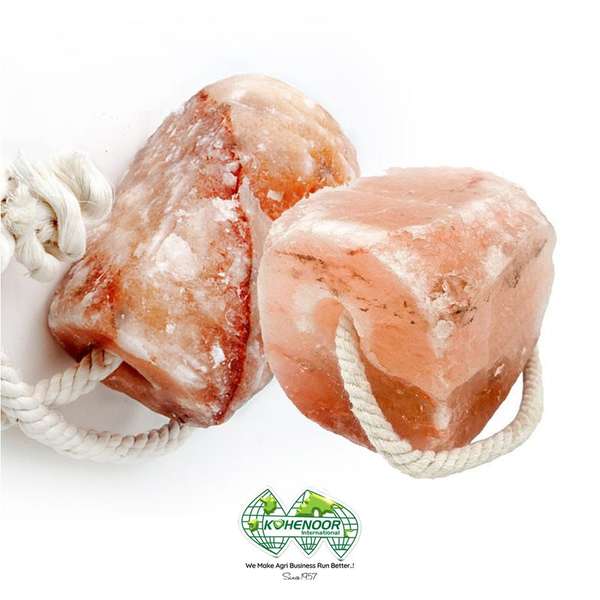
Its signature colour — from pale blush to deep rose — comes from trace iron oxide and other minerals locked in the crystal lattice. Commercial grades range from extra-fine food powder to coarse grinder crystals, lick blocks for livestock, decorative lamp chunks, bath salt, and thick cut cooking plates. You can see full specifications on our Himalayan pink salt product page.
What Is Sea Salt?
Sea salt is made by channelling seawater into shallow ponds and letting sun and wind evaporate the water, leaving salt crystals behind — a method used for thousands of years from the French Atlantic coast (fleur de sel, sel gris) to the Mediterranean, Korea and Southeast Asia. Because it is minimally processed, sea salt retains small amounts of magnesium, calcium and potassium from the seawater, along with traces of algae and clay that give artisanal varieties their character.
The trade-off is that sea salt’s quality is only as good as the water it came from. Modern oceans carry industrial runoff, heavy metals in some regions, and — as a growing body of research shows — microplastic particles that end up in the finished crystal.
7 Key Differences Between Himalayan Pink Salt and Sea Salt
1. Origin and Formation
Pink salt is geological: a fossil sea deposit mined from deep underground, untouched by the modern environment. Sea salt is contemporary: evaporated from today’s oceans, harvested within months of the water leaving the sea. This single difference drives most of the others — purity, mineral fingerprint, and consistency.
2. Mineral Content
Himalayan pink salt contains up to 84 trace minerals and elements, including iron, calcium, magnesium, potassium, zinc and copper, embedded in the crystal itself. Sea salt typically contains a handful of marine minerals — chiefly magnesium and calcium — in amounts that vary batch to batch with the source water and harvest method.
| Property | Himalayan Pink Salt | Sea Salt |
|---|---|---|
| Sodium chloride | ~96-98% | ~95-99% |
| Trace minerals | Up to 84 (incl. iron oxide) | Varies by source (Mg, Ca, K) |
| Formation | ~250 million years ago | Current-day evaporation |
| Microplastics risk | None (pre-plastic era deposit) | Documented in studies |
| Colour | Pink to deep rose | White, grey, or off-white |
| Typical processing | Mined, crushed, sieved | Evaporated, raked, dried |
3. Purity and Contaminants
Because the Khewra deposit predates human industry entirely, pink salt is naturally free of microplastics, and reputable exporters lab-test every lot for heavy metals and insoluble matter. Peer-reviewed studies since 2017 have repeatedly found microplastic particles in commercial sea salts sampled across dozens of countries. For buyers positioning a “clean label” retail product, this is the strongest argument for pink salt.
4. Taste and Culinary Behaviour
Chefs describe pink salt as clean and slightly mineral, with a milder saltiness by volume in coarse form — the larger crystals dissolve more slowly, giving a gentler seasoning curve. Sea salts vary widely: fleur de sel is delicate and briny; grey sel gris is earthy and moist. For everyday cooking the two are interchangeable gram for gram; for finishing, the choice is stylistic.
5. Colour, Texture and Presentation
Pink salt’s rose colour is a genuine retail advantage — it signals provenance at a glance in a clear grinder jar and photographs beautifully. It is supplied dry and free-flowing in grades from 0.3 mm powder to 5+ mm crystals. Many sea salts, especially unrefined ones, retain moisture and clump without anti-caking agents.
6. Price and Supply Stability
At origin, Himalayan pink salt is remarkably economical — Pakistan holds vast proven reserves and mining is unaffected by weather or ocean conditions, so bulk pricing is stable year-round. Artisanal sea salts command premium prices driven by hand-harvest labour and limited seasonal yields. For importers, pink salt offers a rare combination: premium retail positioning with commodity-level input cost.
7. Uses Beyond the Kitchen
Sea salt is almost exclusively a food product. Pink salt supports an entire product family: food-grade salt for cooking and retail grinders, salt lamps for home décor, lick blocks for livestock mineral supplementation, bath salt for the spa and cosmetics trade, and cooking plates for salt-block grilling. One origin, five revenue lines.
Is Pink Salt Healthier Than Sea Salt?
Nutritionally, be honest with your customers: both salts are about 98% sodium chloride, and the trace minerals in either are present in amounts too small to meaningfully contribute to daily intake. Neither salt is a health supplement, and sodium guidance applies equally to both. The genuine health-relevant differences are purity (no microplastics or modern contaminants in pink salt) and transparency (single-origin rock salt is easy to trace and certify). Note that neither pink salt nor most artisanal sea salts are iodised — households relying on them exclusively should ensure iodine from other dietary sources.
Which Should You Choose?
Choose Himalayan pink salt for clean-label retail products, grinder sets, wellness and spa lines, livestock supplementation, or any application where provenance, purity and colour add value. Choose sea salt when a specific regional character (fleur de sel, sel gris) is the selling point. For bulk buyers, pink salt’s price stability and product-family breadth usually make it the stronger commercial bet.
Buying Himalayan Pink Salt in Bulk: What to Check
If you are importing pink salt for retail, food service or industry, verify these before ordering:
- Grade and mesh size: confirm granulation (powder, fine, medium, coarse, chunks) against your filling equipment and end use.
- Purity documentation: ask for a certificate of analysis covering NaCl content, moisture, insolubles and heavy metals for every lot.
- Food-safety certification: work with exporters holding ISO 9001:2015 and HACCP certification for food-grade material.
- Packing options: 25 kg / 50 kg PP bags, 1 MT jumbo bags, or retail-ready pouches and grinder jars packed at origin.
- Shipping terms: FOB Karachi is standard; CIF and CFR quotes to your port should be available on request. GCC transit is 3-5 days; Europe and North America 3-5 weeks.
Kohenoor International has exported Himalayan salt and agricultural products from Pakistan since 1957, serving buyers in 70+ countries with in-house quality control and full export documentation. Read our complete Himalayan pink salt guide for mining, grades and specifications in depth.
Source Himalayan Pink Salt Direct from Pakistan
Food-grade pink salt, lamps, lick blocks, bath salt and cooking plates from the source. ISO 9001:2015 and HACCP certified. COA with every shipment. MOQ from 1 MT. FOB Karachi, CIF and CFR terms.
Request a Quote →Frequently Asked Questions
Is Himalayan pink salt better than sea salt?
For purity, yes: pink salt comes from a deposit sealed underground for ~250 million years, so it carries no microplastics or modern pollutants, while studies have found both in commercial sea salts. Nutritionally the two are similar — the choice is about purity, taste, colour and use case rather than health claims.
Why is Himalayan salt pink?
Trace iron oxide — essentially natural rust — tints the crystal, helped by other minerals in the deposit. Concentration varies by vein, which is why colour ranges from near-white to deep rose within the same mine.
Does sea salt really contain microplastics?
Multiple studies published since 2017 have detected microplastic particles in commercial sea salts from oceans worldwide. Levels vary by source and brand, but the mechanism is unavoidable: sea salt concentrates whatever is in the seawater it came from.
Can pink salt replace sea salt in recipes?
Yes, one-for-one by weight. Match the grain size to the task — fine for baking and dry rubs, coarse for grinders, brining and finishing — and taste as you season, since coarse crystals deliver salt more slowly than flake sea salt.
Where does the best Himalayan pink salt come from?
All genuine Himalayan pink salt comes from the Salt Range of Punjab, Pakistan — most famously the Khewra Salt Mine. Buying from a certified Pakistani exporter shortens the supply chain, improves traceability, and typically cuts landed cost significantly versus re-sellers. Request a quote to compare.