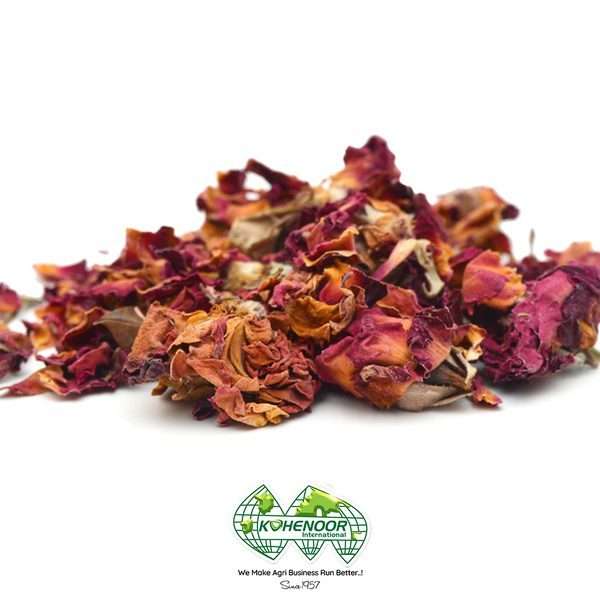
What Is Rosa Gallica?
Rosa gallica — known as the apothecary rose, French rose, or rose of Provins — is one of the oldest cultivated rose species in the world. Native to central and southern Europe and western Asia, it is a compact, hardy shrub bearing intensely fragrant, deep pink to crimson semi-double flowers. Nearly every old garden rose in Europe, including the famed Damask and cabbage roses, counts Rosa gallica among its ancestors.
What sets gallica apart commercially is its behaviour after harvest: its petals keep their colour and perfume exceptionally well when dried. That single property made it the rose of medieval apothecaries, Persian confectioners and modern herbal tea houses alike — and it is why dried rose petals remain one of the most traded botanical ingredients today.
A Short History of the Apothecary Rose
Rosa gallica was grown by the Greeks and Romans, who used its petals in garlands, baths and remedies. The variety Rosa gallica var. officinalis — literally “of the apothecary” — became the foundation of a whole medieval industry in the French town of Provins, where petals were processed into conserves, syrups, powders and rose honey and sold across Europe for some six centuries. In Persia and Mughal India, rose petals were worked into gulkand (rose petal preserve), rose sherbets and attar. The apothecary rose even entered heraldry as the Red Rose of Lancaster.
This heritage matters to buyers because the traditional uses — tea, conserve, cosmetics, distillation — are precisely the markets that drive dried-petal demand now. The product has three thousand years of continuous use behind it.
Rosa Gallica vs Rosa Damascena
The two names dominate the rose trade and are often confused:
| Property | Rosa gallica | Rosa damascena |
|---|---|---|
| Common name | Apothecary / French rose | Damask rose |
| Primary trade | Dried petals & buds, tea, cosmetics | Rose oil (attar), rose water |
| Petal colour dried | Deep red-crimson, holds colour | Pink, fades faster |
| Fragrance | Rich, classic “old rose” | Intense, prized for distillation |
| Best for | Visible petals: tea blends, baths, garnish | Extracted products: oil, hydrosol |
In practice, much commercial dried-petal supply blends gallica-type deep red petals for colour with fragrant damascena-type material — which is why specifying colour grade and cultivar matters when you buy.
Uses of Rosa Gallica
Herbal Tea and Tisanes
Whole and crushed petals are blended into caffeine-free tisanes, green-tea blends and wellness infusions. Deep crimson gallica petals are the visual centrepiece of premium loose-leaf blends — colour retention directly drives shelf appeal and price.
Cosmetics and Skincare
Rose petals and rose extracts appear in face masks, bath soaks, soaps, toners and rose-water formulations. The cosmetics trade buys petals whole (bath and spa), crushed (soaps, scrubs) and as powder (masks). Gallica’s anthocyanin-rich pigment gives natural colour without dyes.
Culinary Uses
Edible rose petals garnish desserts, chocolates, biryanis and beverages; gulkand and rose petal jam remain major petal consumers across South Asia and the Middle East. Food applications require food-grade certification, pesticide-residue testing and clean drying — not florist-grade material.
Aromatherapy, Potpourri and Décor
Buds and petals scent potpourri, sachets, candles and wedding décor. This decorative segment values uniform colour and intact petal structure above all.
Benefits: What the Petals Contain
Rose petals are naturally rich in polyphenols, anthocyanins (the red pigments), flavonoids and aromatic volatile oils. Traditional systems used rose for calming, digestive and skin-soothing preparations, and modern interest in the ingredient follows the same themes. Be accurate with end customers: dried rose petals are a food and cosmetic botanical with genuine antioxidant content — not a medicine — and marketing claims should stay within your market’s regulations.
Quality Parameters for Dried Rose Petals
When buying in bulk, specify: colour grade (deep red / red / pink mix), form (whole petals, buds, crushed, powder), moisture (below 10-12%), purity (stem and foreign-matter limits), drying method (shade or sun dried), and food vs cosmetic grade with pesticide-residue testing per lot.
How Dried Rosa Gallica Petals Are Produced
Roses are hand-picked at dawn, when volatile oil content peaks, then de-stemmed and spread on drying racks. Shade drying preserves the deepest colour for premium tea and cosmetic grades; sun drying is faster and suits potpourri grades. Petals are then sorted, sieved by size, metal-detected, and packed in moisture-barrier liners inside cartons or bags. Pakistan’s dry harvest climate in Punjab and Sindh produces petals with excellent colour stability, and its rose industry — clustered around traditional growing areas — supplies whole petals, buds and crushed grades year-round from cold storage.
Sourcing Rosa Gallica Petals from Pakistan
Kohenoor International has exported dried flowers and botanical products from Pakistan since 1957, including dried rose petals and buds shipped to tea packers, cosmetic manufacturers and food processors across 70+ countries. Every lot ships with a certificate of analysis, ISO 9001:2015 and HACCP certification, and phytosanitary documentation. Standard packing is 10-25 kg cartons with inner liners; MOQ starts at 500 kg, with FOB Karachi, CIF and CFR terms. Our dedicated platform dryrose.org covers the rose petal line in depth, and our dried rose petals uses guide details applications by industry.
Growing Rosa Gallica
For growers, Rosa gallica is among the least demanding of all roses. It is a suckering shrub reaching 1-1.5 metres, hardy to well below freezing, tolerant of poor soils, and highly resistant to the fungal diseases that plague modern hybrid teas. It flowers once, generously, in early summer — a trait commercial petal growers plan harvest labour around. Plants establish from suckers or hardwood cuttings and remain productive for decades with little more than annual pruning after bloom.
Petal yield and quality peak when flowers are picked just as they open fully, before midday heat draws down the volatile oils. A well-managed mature stand can be picked repeatedly over a three-to-four-week flowering window, and because harvesting is manual, origin regions with skilled, cost-effective farm labour — Pakistan among them — hold a durable advantage in the dried petal trade.
Market Demand for Rose Petals
Global demand for dried rose petals has grown steadily on three fronts. First, the premium tea and tisane market keeps expanding, with rose consistently among the top-selling floral ingredients. Second, natural cosmetics brands continue replacing synthetic fragrance and colour with botanical ingredients, pulling in petal powder and whole-petal grades. Third, food-service and confectionery use of edible flowers has moved from niche to mainstream in the GCC, Europe and North America. Buyers increasingly ask for traceability, residue testing and certified food-grade handling — requirements that favour established exporters over informal supply chains.
Buy Premium Dried Rose Petals in Bulk
Deep red petals, rose buds and crushed grades — food and cosmetic grade, ISO 9001:2015 and HACCP certified, COA with every shipment. MOQ 500 kg. FOB Karachi, CIF and CFR terms to any port.
Request a Quote →Frequently Asked Questions
What is Rosa gallica used for?
Herbal tea, rose water and conserves, natural cosmetics, culinary garnish, and potpourri. Its dried petals hold colour and fragrance better than most rose species, which made it the apothecary rose of Europe and keeps it in demand today.
Is Rosa gallica the same as the Damask rose?
No. Rosa gallica is a parent species prized for dried petals and colour; Rosa damascena is its hybrid descendant grown chiefly for rose oil and rose water. They serve different segments of the rose trade.
Are Rosa gallica petals edible?
Yes — rose petals have centuries of culinary use in jams, gulkand, teas and confectionery. Use only food-grade petals from a supplier that provides pesticide-residue testing and a certificate of analysis.
What does rose petal tea taste like?
Delicately floral with a light, sweet aroma and a gentle astringency similar to a very mild green tea. It is caffeine-free and blends well with green tea, hibiscus and chamomile.
How should dried rose petals be stored?
Keep petals in airtight, opaque packaging away from light, heat and humidity. Properly dried petals (under ~12% moisture) hold colour and aroma for 18-24 months. For bulk buyers, unopened lined cartons store well in cool, dry warehouse conditions. Request a quote for current crop availability.