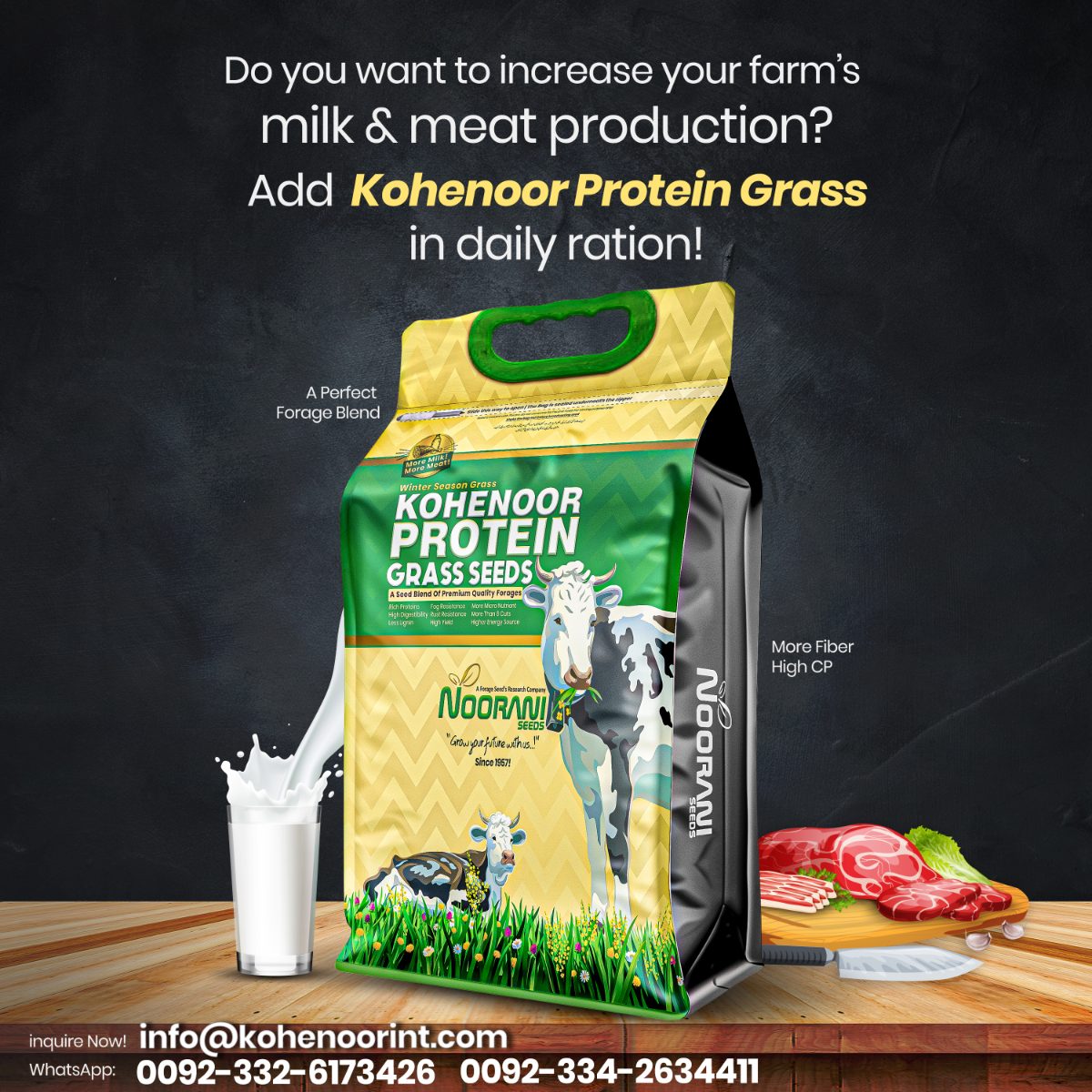
Why Nigerian Dairy Clusters, Ranches and Agro-Dealers Choose Protein Grass
Nigeria’s livestock policy has shifted from open grazing toward ranches, grazing reserves and dairy clusters under the National Livestock Transformation Plan and state ranching programmes. A settled herd needs planted fodder, and planted fodder only pays when it carries enough protein to move milk yield and daily gain. That is exactly the gap Protein Grass closes.
- Dry-season protein when it is scarcest — Sown under irrigation in the cool harmattan window (November-January) in the North, it is cut from late December through the hungry months of February-April, when crop residues are exhausted and cowpea and groundnut haulms are at their highest price.
- Replaces expensive concentrate — With 26-38% crude protein in the green fodder, farmers report 2-5 kg more milk per cow per day and roughly 50% less concentrate — a decisive saving when cottonseed cake, soybean meal and wheat offal prices follow the naira.
- Built for settled herds and ranches — A one-acre plot from a 10 kg bag gives daily cut-and-carry feed for 4-5 stall-fed or semi-settled cows from day 45, harvested 10 cm above ground so the stand regrows for months.
- Far more protein than stover and natural pasture — Sorghum and maize stover and dry Andropogon or Hyparrhenia pasture carry 3-7% crude protein; Protein Grass cut young carries several times that, so a small plot moves the whole ration.
- NAQS-ready documentation — Every consignment ships with the phytosanitary certificate and Certificate of Analysis matched to the importer’s NAQS import permit, so quarantine inspection at Lagos or Onne clears without delay.
- Trial from 500 kg — Dairy clusters, ranch operators, state ministries, processors and development programmes can trial 50 acres before committing a container.
The Nigerian Dairy and Beef Market: A Big Herd, a Big Import Bill and a Feed Gap
Nigeria spends well over a billion dollars a year on imported milk powder and dairy products, and processors have set out to replace part of that with local milk through backward-integration dairy schemes in Kaduna, Kwara, Oyo, Plateau, Niger and Kano. Milk collection centres buy from Fulani pastoralists and settled dairy farmers, and the binding constraint everywhere is dry-season feed. On the beef side, fattening units in Kano, Katsina, Bauchi, Kaduna and around Abuja finish cattle, sheep and goats for the Lagos, Port Harcourt and Abuja markets and for the Sallah festivals, when demand and prices peak. Ranches established under state ranching programmes and the grazing-reserve rehabilitation agenda need productive planted pasture to keep herds settled through the dry season.
Protein Grass is a complement to Napier, Brachiaria, sorghum and crop-residue feeding, not a replacement for them: keep the bulk crops for rumen fill and add a Protein Grass plot to lift the protein of the whole ration. A cluster that sows 50 acres of Protein Grass under a borehole or small-scale irrigation scheme in November has green, high-protein feed for its milking cows through January to April and keeps milk flowing to the collection centre when supply usually collapses. For fattening units the outcome is gain: animals finishing on high-protein green fodder reach 700-800 g a day and hit market weight faster before Sallah. For processors and state programmes the arithmetic is simple: a 500 kg trial that lifts each cow by 2-3 litres a day pays for itself within the first month of cutting.
Applications for Kohenoor Protein Grass in Nigeria
Dairy Clusters & Milk Collection
Kaduna, Kwara, Oyo, Niger, Kano
2-5 kg more milk per cow per day
Processor-linked clusters and cooperatives replacing part of their concentrate with high-protein green fodder from irrigated plots.
Recommended: 10 KG (one acre) bags via cluster leaders
Plateau Dairy Farms
Jos, Vom, Mambilla, Obudu
Cool climate, longest cutting season
Highland temperatures below 28°C for most of the year allow rain-fed sowing and the most cuts per stand in the country.
Recommended: 10-25 KG bags
Ranches & Grazing Reserves
State ranching and NLTP sites
Dry-season green fodder, 5-8 cuts
Settled herds on ranches and rehabilitated grazing reserves need planted, irrigated fodder to stay productive through the dry season.
Recommended: 25 KG bags, 500 KG+
Cattle Fattening
Kano, Katsina, Bauchi, Abuja FCT
700-800 g daily gain
Feedlots and fattening yards finishing bulls for the Lagos, Port Harcourt and Sallah markets on green fodder.
Recommended: 10-25 KG bags
Sheep & Goats
Sokoto, Kebbi, Jigawa, Oyo
Faster finishing for Sallah rams
Ram and goat fatteners preparing animals for festival markets, when every kilogram of liveweight earns a premium.
Recommended: 5-10 KG bags
Government & Development Programmes
State ministries, ADPs, donor projects
Tender-grade certification
Programmes distributing fodder seed to pastoralists and settled farmers with full analysis, NAQS permit alignment and origin documents.
Recommended: Certified lots with tender document pack
Ta’aitaccen bayani da Hausa: irin Kohenoor Protein Grass ga makiyaya da manoman Najeriya
Kohenoor Protein Grass irin ciyawar abincin dabbobi ce mai yawan furotin (furotin 26-38%), wadda aka shirya domin manufa guda: karin madara da karin nama daga gona guda. Ana yanka ta farko bayan kwana 45, sannan duk bayan kwana 20-25, har sau 5-10 a kakar shuka guda. Manoma sun ce shanunsu na kara kilo 2-5 na madara kowace rana cikin kwana 20-25, kuma suna rage abincin karfi (concentrate) da kusan rabi. Ana shuka kilo 10 a kowace eka (kilo 12-15 a kasa mai yashi). A shuka lokacin da zafin rana bai wuce digiri 28 ba — a Arewa lokacin sanyin hunturu (Nuwamba zuwa Janairu) da ban ruwa, a Jos da Mambilla kusan duk shekara. A sa takin DAP kilo 50 a eka lokacin shuka, da urea bayan kowace yanka; a yanka santimita 10 sama da kasa domin ta sake tsirowa. Akwai buhu na kilo 5, 10 da 25; mafi karancin oda kilo 500. Muna jigilar kaya daga Karachi zuwa Lagos ko Onne tare da takardun NAQS da takardar binciken inganci. Tuntube mu ta WhatsApp +92 310 4929292 ko export@kohenoorint.com domin farashi da samfuri kyauta.
Kohenoor Protein Grass Specifications
| Parameter | Specification |
|---|
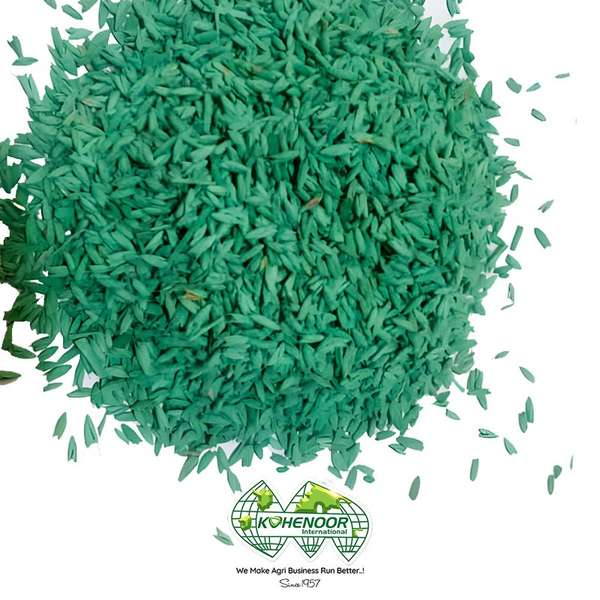
| Product | Kohenoor Protein Grass — “More Milk, More Meat” proprietary high-protein forage seed blend, developed by Noorani Seeds (Kohenoor group) with premium seed lines imported from Germany and blended in Pakistan. Formulation is proprietary; performance is specified below. |
| Crude Protein | 26-38% (cumulative CP of the blend) |
| Crude Fibre | 26% maximum |
| Mineral Content | ~10% |
| Dry Matter | ~45% |
| Purity | 98% minimum |
| Germination | 85% minimum |
| Moisture | ≤12% |
| Seed Rate | 10 kg per acre (25 kg/ha); 12-15 kg per acre on light or sandy soils |
| Sowing Window | When daytime temperature is 28°C or below: November-January under irrigation in the North; most of the year on the Jos, Mambilla and Obudu plateaus; cooler mid-rainy-season months or irrigation in the Middle Belt and South |
| Cutting Schedule | First cut 45 days after sowing, then every 20-25 days; cut 10 cm (4 in) above ground for fast regrowth |
| Number of Cuts | 5-10 per stand depending on sowing date and climate |
| Fresh Yield | About 10-12 t per acre per cut under good management |
| Fertiliser Guide | DAP 50 kg/acre at sowing; urea after each cut |
| Packaging | 5 KG (half acre), 10 KG (one acre) and 25 KG bags; jumbo bags for projects |
| MOQ | 500 KG |
| HS Code | 1209.29 |
| Incoterms | FOB Karachi / CFR / CIF |
| Documents | Phytosanitary Certificate + Certificate of Analysis (purity, germination, moisture) with every shipment |
Shipping & Logistics: Karachi to Nigeria
We load at Karachi Port (KICT / SAPT). Bagged seed ships on pallets in 20-foot containers, usually via a transhipment hub, to Nigeria’s main container ports and then by road to the dairy and ranching states:
| Destination Port | Typical Transit Time | Serves |
|---|
| Lagos — Apapa / Tin Can Island | 28-38 days | Lagos, Ogun, Oyo, South-West; road onward to Kaduna and Kano |
| Lekki Deep Sea Port | 28-38 days | Lagos and the South-West; newer, faster gate-out |
| Onne (Port Harcourt) | 30-40 days | South-South, South-East, Plateau and Benue via road |
| Air freight to Lagos (LOS) or Abuja (ABV) | 5-8 days | Samples and urgent small lots |
Documentation for NAQS, NASC and Nigeria Customs Clearance
Plant material entering Nigeria is regulated by the Nigeria Agricultural Quarantine Service (NAQS), which issues the import permit and inspects consignments at the port of entry; the National Agricultural Seeds Council (NASC) oversees seed quality and the seed trade within Nigeria; and customs clearance runs through the Nigeria Customs Service with Form M processed through an authorised bank. Every Kohenoor consignment to Nigeria includes:
- Phytosanitary Certificate — issued by Pakistan’s Department of Plant Protection, meeting the conditions on your NAQS import permit and declaring freedom from quarantine pests and weed seeds
- Certificate of Analysis — purity, germination, moisture and inert matter per lot, plus the blend performance specification (crude protein, crude fibre, minerals, dry matter)
- Certificate of Origin — attested by the Hyderabad Chamber of Commerce
- Commercial invoice, packing list and Bill of Lading — consistent product description (forage seed mixture, HS 1209.29), lot numbers and net weights matching your Form M
- Importer support — we align documents with your NAQS permit and Form M and coordinate with your clearing agent at Lagos or Onne
How Importers in Nigeria Order From Us
- Step 1 — Enquiry & Quote: Send your target specification, volume, and destination port via our order page or WhatsApp. We respond with a firm FOB Karachi / CFR / CIF quotation within 24 hours, valid for a stated period against current crop pricing.
- Step 2 — Sample Approval: We courier a representative sample to your farm, cluster or laboratory in Nigeria so you can verify the lot against the Certificate of Analysis before committing.
- Step 3 — Contract & Payment: We issue a proforma invoice covering quantity, specification, packing, Incoterms, and payment terms (T/T or irrevocable LC at sight) for your Form M. Processing and container booking begin on confirmation.
- Step 4 — Shipment & Documents: Container stuffed, sealed, and loaded at Karachi; the complete document set is couriered or released per agreed terms before arrival at your port in Nigeria.
Why Kohenoor International
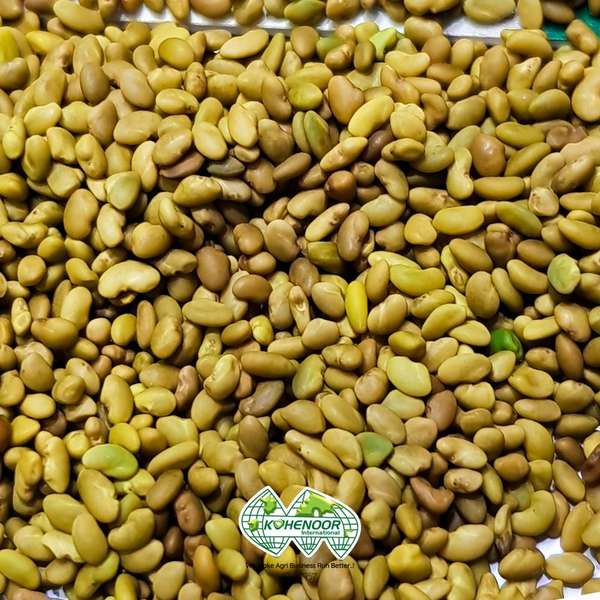
Kohenoor International already supplies forage seed to buyers across Africa, including Kenya, Ethiopia, Uganda, Tanzania and South Africa, and ships alfalfa seed to Nigeria. Protein Grass is sold to thousands of Pakistani dairy farmers every season before export — that domestic track record is your assurance.
- Exporting Since 1957 — Nearly seven decades of continuous agricultural export experience from Hyderabad, Sindh, across three generations of the business.
- 70+ Countries Served — Our seeds, herbs, spices, and Himalayan salt ship to buyers in more than 70 countries across five continents.
- ISO 9001:2015 + HACCP Certified — Documented quality management and food-safety controls across sourcing, processing, and packing.
- 60+ Product Portfolio — Alfalfa, Rhodes grass, berseem, sesame, fennel, fenugreek, Himalayan salt, and dozens more — consolidate several products into one container from one audited supplier.
- Industry Memberships — Hyderabad Chamber of Commerce, Rice Exporters Association of Pakistan (REAP), and the International Seed Federation (ISF).
- Full Traceability & Testing — Every lot is lab-tested and shipped with a Certificate of Analysis; samples are couriered before you commit.
Frequently Asked Questions — Kohenoor Protein Grass to Nigeria
When can Protein Grass be sown in Nigeria?
Whenever daytime temperatures are 28°C or below and water is available. On the Jos, Mambilla and Obudu plateaus that is most of the year; in the North (Kano, Kaduna, Katsina, Bauchi) sow under irrigation in the cooler harmattan window from November to January; in the Middle Belt and South-West sow with the cooler mid-rainy-season months (July-September) or under irrigation.
How much seed does a Nigerian farm need?
10 kg per acre (a 10 kg bag) or 5 kg for a half-acre cut-and-carry plot; 12-15 kg per acre on light sandy soils in the North. Sow on moist, well-prepared soil, cover lightly, keep moist until emergence and take the first cut at 45 days.
How does Protein Grass compare with crop residues and natural pasture?
Groundnut haulms and cowpea hay are good but scarce and expensive in the dry season; sorghum and maize stover and dry-season natural pasture carry only 3-7% crude protein. Protein Grass delivers 26-38% crude protein as green fodder, which is why farmers report 2-5 kg more milk per cow per day and roughly half the concentrate.
What is the minimum order and how does it reach Nigeria?
MOQ is 500 kg (50 acres) in 5, 10 or 25 kg bags, shipped FOB Karachi or CFR/CIF Lagos (Apapa, Tin Can Island or Lekki Deep Sea Port) or Onne in about 28-38 days, then by road to Kaduna, Kano, Jos, Ibadan or Abuja. Dairy clusters, ranches and agro-dealers typically order 1-5 MT.
What permits are needed to import forage seed into Nigeria?
The importer obtains an import permit from the Nigeria Agricultural Quarantine Service (NAQS) before shipment, and seed sold to farmers falls under the National Agricultural Seeds Council (NASC) framework. Our phytosanitary certificate, Certificate of Analysis and origin documents are prepared to match the permit for NAQS inspection and Nigeria Customs Service clearance.