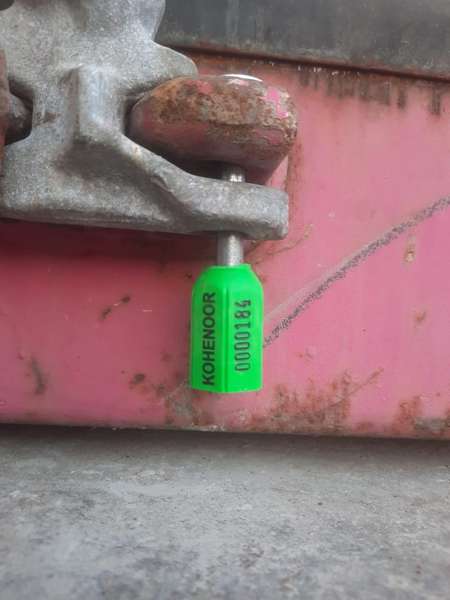
Importing Seeds from Pakistan: The Short Version
Pakistan is one of the world’s most cost-competitive origins for forage seeds (alfalfa, berseem clover, Rhodes grass, sesbania), oil seeds (sesame, castor), and spice seeds (fenugreek, fennel, ajwain, kalonji). Importing is straightforward when you do four things in the right order: confirm your country’s import requirements, choose a certified exporter, lock the specification and Incoterm in a proforma invoice, and make sure the export documents match your customs entry line for line. This guide walks through each step the way an experienced buyer would — from first inquiry to container at your warehouse.
Kohenoor International has shipped seeds from Pakistan to importers in 70+ countries since 1957, so the checklists below reflect what actually clears customs in the GCC, EU, East Africa, South-East Asia and North America — not theory.
Step 1: Know Whether You Are Importing Seed for Sowing or for Consumption
This is the single most important distinction, because it decides which regulator and which documents apply at your end.
- Seeds for sowing (alfalfa, clover, Rhodes grass, sesbania, vegetable seed) are regulated as plant reproductive material. Most countries require an import permit or registration, a phytosanitary certificate, and often a seed analysis report showing purity and germination. Some markets restrict specific species or require variety registration.
- Seeds for consumption (sesame, fenugreek, fennel, ajwain, kalonji, basil seed) are regulated as food. Requirements centre on food safety: certificate of analysis, pesticide-residue and aflatoxin limits, HACCP or ISO documentation, and food-import registration (for example FDA Prior Notice in the USA or IPAFFS pre-notification in the UK).
The same species can fall into either category — fenugreek shipped as a spice is food; fenugreek shipped for a forage trial is seed for sowing. Tell your supplier the end use at the inquiry stage so the correct HS code, certificates and labelling are used.
| Product | Typical HS code | Category | Key certificate |
|---|---|---|---|
| Alfalfa seed | 1209.21 | Sowing | Phytosanitary + seed analysis |
| Clover (berseem) seed | 1209.22 | Sowing | Phytosanitary + seed analysis |
| Rhodes grass / forage grass seed | 1209.29 | Sowing | Phytosanitary + seed analysis |
| Sesame seed | 1207.40 | Food / oil seed | Phytosanitary + COA |
| Fennel seed | 0909.61 | Spice | Phytosanitary + COA |
| Fenugreek seed | 0910.99 | Spice | Phytosanitary + COA |
| Himalayan pink salt | 2501.00 | Food / mineral | COA + health certificate |
HS codes above are the internationally harmonised six-digit headings; your national tariff adds two to four more digits. Confirm the final line with your customs broker before the supplier prepares documents.
Step 2: Check Your Country’s Import Requirements
Requirements vary widely, but these are the patterns buyers most often meet:
Gulf Cooperation Council (UAE, Saudi Arabia, Oman, Qatar, Kuwait, Bahrain)
The GCC is Pakistan’s largest forage-seed market. Importers typically need a phytosanitary certificate from Pakistan, a certificate of origin attested by the chamber of commerce, and registration with the national agriculture ministry (for example MOCCAE in the UAE or MEWA in Saudi Arabia). Transit from Karachi to Jebel Ali or Dammam is short — usually four to seven days — which is why GCC dairy and camel farms restock alfalfa seed from Pakistan every season.
European Union and United Kingdom
Seed for sowing must meet EU marketing rules: species listed in the Common Catalogue require certified lots, while many forage and minor species can enter under specific derogations or for research and multiplication. Spice seeds enter as food and must comply with EU maximum residue levels (MRLs) and contaminant limits; buyers usually request a pesticide-residue panel and a non-GMO declaration. Since 2024 the UK operates its own Border Target Operating Model, with IPAFFS pre-notification and a phytosanitary certificate for plant products.
United States
Seed for sowing is regulated by USDA APHIS. Small commercial lots of many species can enter with a phytosanitary certificate and a Federal Seed Act declaration; certain species require an APHIS import permit. Food seeds and spices need FDA facility registration of the exporter, Prior Notice for each shipment, and FSVP compliance by the importer. Transit to the US East Coast is typically 35 to 45 days.
East Africa and South Asia
Kenya (KEPHIS), Tanzania (TOSCI), Ethiopia and Sudan issue seed import permits per consignment and inspect on arrival. India requires an import permit from the Plant Protection Adviser for seeds for sowing and applies plant-quarantine inspection on arrival. Bangladesh, Sri Lanka and Nepal follow similar permit-plus-phytosanitary models.
Ask your supplier for a “document dry run”
Before the first shipment, request draft copies of every certificate the exporter will issue. Send them to your customs broker and agriculture ministry contact for a pre-check. Fixing a wrong botanical name, missing treatment statement or incorrect consignee address on a draft costs nothing; fixing it on an original while a container waits at port costs demurrage every day.
Step 3: Choose a Certified Exporter, Not a Trader
Pakistan has hundreds of seed traders but only a small number of processor-exporters with their own cleaning, grading and packing lines. Working directly with a processor gives you control over specification and traceability, and usually a lower landed price because there is no middle margin. Check these points before you commit:
- Food-safety and quality certification — ISO 9001:2015 and HACCP at minimum for food seeds; ask to see certificates with valid dates (see our certifications page for the format to expect).
- Registered exporter status — the company should hold an export registration and chamber-of-commerce membership so it can obtain attested certificates of origin.
- In-house processing — cleaning, gravity separation and sieving equipment on site means purity claims can be backed by pre-shipment samples.
- Export track record — ask for references or shipment records to your region; an exporter who ships to the GCC every month knows the paperwork by heart.
- Verifiable identity — a physical address, landline, company registration and third-party profiles (Wikidata, LinkedIn, TradeKey, Alibaba Trust Pass) that agree with each other.
Kohenoor International processes at its own facility in Hyderabad, Sindh, holds ISO 9001:2015 and HACCP certification, and is a member of the International Seed Federation. You can review specifications for every product line on the products page.
Step 4: Specify the Product Precisely
Seed quality is defined by numbers, not adjectives. A professional inquiry states:
- Botanical name and variety — e.g. Medicago sativa, non-dormant, for alfalfa seed; Trifolium alexandrinum for berseem.
- Purity (physical) — 98% or 99% minimum for forage seed; 99% for sesame and spice seeds.
- Germination — 85% minimum is standard for alfalfa and clover; specify test method (ISTA) if your regulator requires it.
- Moisture — 10% maximum for most seeds; 6-8% for sesame.
- Weed-seed declaration — for alfalfa and clover, confirm dodder-free (Cuscuta spp.) and state any quarantine weed species prohibited in your country.
- Grade and colour — for sesame seed: natural white, hulled, or black; for fenugreek: bold or regular size.
- Packing — 25 kg or 50 kg PP bags, paper bags, or 1 MT jumbo bags; printed or plain; palletised or loose.
- Treatment — fumigation with methyl bromide or phosphine if required at destination, or an explicit “untreated” statement for organic or sowing use.
Ask for a 200-500 g pre-shipment sample of the actual lot and, for larger contracts, a third-party inspection (SGS, Bureau Veritas, Intertek) at loading. The cost is small against a container worth tens of thousands of dollars.
Step 5: Understand Pricing, Incoterms and Payment
Incoterms
Pakistani seed exporters quote mainly on three bases. FOB Karachi (or Port Qasim) means the seller clears export and loads the container; you arrange and pay ocean freight and insurance. CFR adds ocean freight to your port. CIF adds freight and marine insurance. First-time importers often prefer CFR or CIF so the exporter handles the shipping line; experienced importers with freight contracts take FOB.
Container loads and MOQs
A 20-foot container carries roughly 18-20 metric tons of bagged seed; a 40-foot container is usually weight-limited around 25-26 metric tons rather than volume-limited. Minimum orders from Kohenoor start at 1 metric ton for most seeds, which allows trial orders by LCL (less than container load) or air freight before committing to full containers.
Payment terms
The market standard is telegraphic transfer (T/T): 30% advance with the order and 70% against a copy of the bill of lading. For larger or first contracts, an irrevocable letter of credit at sight from a recognised bank is normal. Be cautious of any “supplier” asking for 100% advance to a personal account; a registered exporter receives payment into a company account under its own name.
What drives price
Seed prices move with the Pakistani harvest (alfalfa and berseem are harvested April-June; sesame in September-November; fenugreek and fennel in March-May), with purity and germination grade, with packing, and with freight rates on your lane. Buying close to harvest generally gives the widest choice of lots; buying off-season is possible from cold or dry storage but with a premium. A quote is valid for a stated period — typically 7 to 15 days — because the rupee-dollar rate and freight both move.
Step 6: The Export Document Set
A complete, consistent document set is what actually clears your shipment. For a seed consignment from Pakistan expect the following:
| Document | Issued by | Purpose |
|---|---|---|
| Commercial invoice | Exporter | Value, Incoterm, HS code, payment terms |
| Packing list | Exporter | Bags, net/gross weight, lot numbers, container and seal numbers |
| Bill of lading (or air waybill) | Shipping line / airline | Title and transport contract |
| Phytosanitary certificate | Department of Plant Protection, Pakistan | Plant-health status; required for all seeds |
| Certificate of origin | Chamber of commerce | Preferential duty and customs origin |
| Certificate of analysis (COA) | Exporter lab / third party | Purity, germination, moisture, admixture |
| Fumigation certificate | Licensed fumigator | Treatment record if required at destination |
| Non-GMO / health declaration | Exporter | Food-safety and regulatory declarations |
| Seed analysis report (ISTA) | Accredited seed lab | Sowing seed for markets that require it |
Every document must show the same consignee, botanical name, quantity, lot number and container number. Mismatches — for example “lucerne” on the invoice and “alfalfa” on the phytosanitary certificate — are the most common cause of customs holds. Insist that the supplier sends scanned drafts for approval before originals are couriered or released through the bank.
Step 7: Shipping, Transit and Arrival
Almost all seed exports leave from Karachi Port or Port Qasim. Lead time from order confirmation to loading is typically 10-15 days for stock lots and 3-4 weeks if the lot must be cleaned to a special specification. Approximate sea transit times from Karachi are: Gulf ports 4-7 days; Mombasa and Dar es Salaam 12-18 days; Colombo and Chittagong 7-12 days; Singapore and Port Klang 12-16 days; Rotterdam, Hamburg and Felixstowe 25-32 days; US East Coast 35-45 days; Australian east coast 25-35 days.
Seeds are hygroscopic, so ask for lined bags, silica desiccant in the container and ventilated stowage for long tropical transits. On arrival, inspect the container seal against the packing list, draw samples from several bags for your own germination test, and store seed cool and dry. Forage seed keeps germination best below 15 °C and 60% relative humidity.
Common Mistakes First-Time Importers Make
- Ordering before checking the permit. Some countries take weeks to issue a seed import permit; apply first, then confirm the order.
- Accepting a price without a specification. A low price for “alfalfa seed” with no purity or germination figure is not comparable to a certified 99/85 lot.
- Skipping the pre-shipment sample. The sample is your contract reference if there is a dispute on arrival.
- Letting the shipping line issue an express BL too early. Keep control of the original bill of lading until payment terms are satisfied — this protects both sides.
- Not planning for seasonality. Order alfalfa and berseem seed for autumn sowing in the GCC by July; order sesame for Q1 delivery in October.
Why Source Seeds from Pakistan?
Pakistan combines a large domestic seed and spice production base, low processing costs, and short sea lanes to the Middle East, East Africa and South Asia. Its alfalfa and berseem seed are adapted to hot, saline and irrigated conditions that match GCC and North African farming; its sesame is sought for natural white and black grades; and its Himalayan pink salt is the only genuine source in the world. For a buyer, that means competitive FOB prices, quick transit, and exporters who have handled your market’s paperwork many times before. For a deeper look at individual products, see our guides to alfalfa seed, sesame and Himalayan pink salt.
Import Seeds Direct from a Certified Pakistani Exporter
Alfalfa, berseem, Rhodes grass, sesame, fenugreek, fennel and 60+ more products. ISO 9001:2015 and HACCP certified, exporting since 1957 to 70+ countries. Full document set, pre-shipment samples, MOQ from 1 MT. FOB Karachi, CFR and CIF terms.
Request a Quote →Frequently Asked Questions
Do I need an import licence to import seeds from Pakistan?
For seeds for sowing, most countries require an import permit or registration from the national plant-protection authority before shipment. For seeds sold as food or spice, you generally need food-importer registration rather than a seed permit. Check with your agriculture ministry or customs broker, and apply before confirming the order.
What documents come with a seed shipment from Pakistan?
A standard set includes the commercial invoice, packing list, bill of lading, phytosanitary certificate from Pakistan’s Department of Plant Protection, chamber-attested certificate of origin, certificate of analysis, and, where required, fumigation certificate, non-GMO declaration and ISTA seed analysis report.
What is the minimum order quantity for seeds from Pakistan?
Kohenoor International supplies most seeds from 1 metric ton, which suits trial orders by LCL or air freight. Full-container orders of 18-20 MT (20 ft) or 25-26 MT (40 ft) give the lowest cost per kilogram.
How long does shipping from Pakistan take?
Allow 10-15 days for preparation plus sea transit of roughly 4-7 days to the Gulf, 12-18 days to East Africa, 25-32 days to Northern Europe and 35-45 days to the US East Coast. Air freight for samples or urgent small lots takes 3-7 days door to door.
What payment terms do Pakistani seed exporters accept?
The usual terms are 30% T/T advance with 70% against bill-of-lading copy, or an irrevocable letter of credit at sight. Payments should go to the exporter’s registered company bank account, never to a personal account.
How do I verify a Pakistani seed exporter is genuine?
Check for a physical processing facility, valid ISO 9001:2015 and HACCP certificates, chamber-of-commerce membership, consistent third-party profiles, and references in your region. Request a pre-shipment sample and, for large orders, third-party inspection at loading. Contact Kohenoor International for references and documents.